Embedded AI‑generated summaries directly into the reporting workflow, turning a 15‑minute manual task into an instant insight for busy agency teams.
CONFIDANCE NOTICE
This case study contains information from work completed under non-disclosure agreements. Sensitive details have been modified or omitted to respect confidentiality obligations. The content represents my personal analysis and work contributions, and does not necessarily reflect the views or positions of Whatagraph.
INTRODUCTION
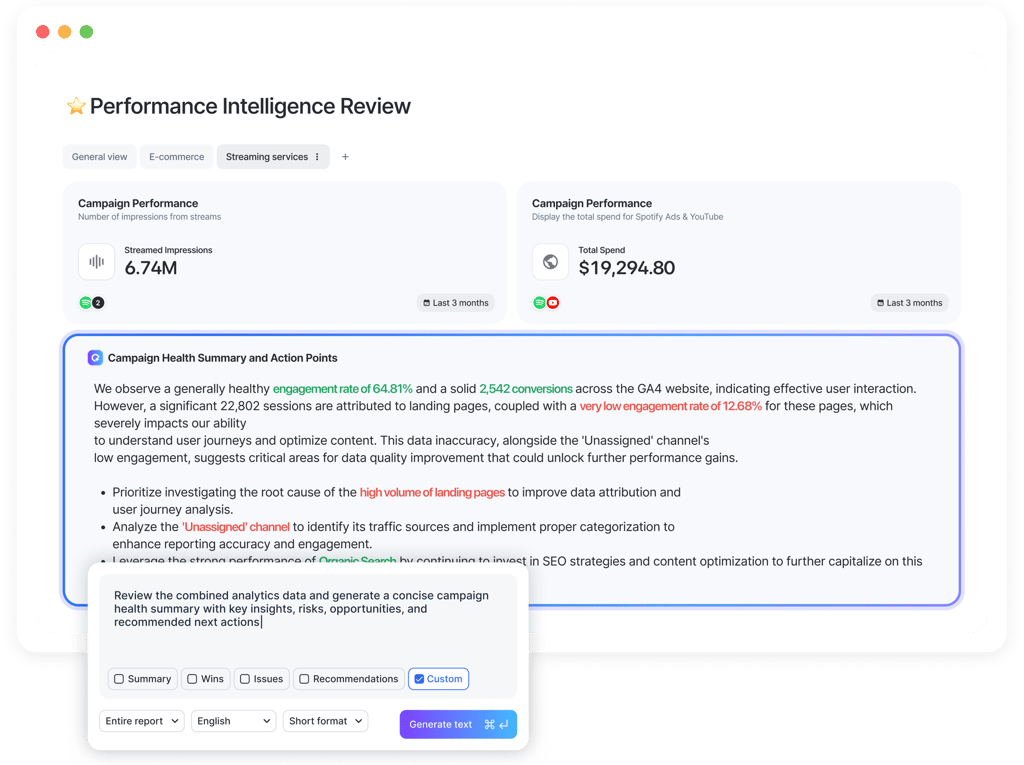
This initiative introduced AI-powered summary generation directly into the reporting workflow — transforming a manual reporting task into a more scalable and intelligent product capability.
MY ROLE
I led the design of the AI summary experience - defining how prompt - based generation, tone options, and language controls should work within real reporting workflows. I also shaped how AI generation would integrate directly into the existing elements so it felt like a natural extension of the workflow, not a separate tool.
Working closely with product and engineering, I translated the concept into a scalable and intuitive solution ready for development.


CONTEXT
Even when the insights themselves were straightforward, writing them still took time and repeated mental effort.
At scale, that created real operational overhead. Across 20+ clients, teams were repeatedly spending 10–15 minutes per report on a task that was valuable, but often repetitive.
IMPACT
CHALLANGE
Agencies needed to deliver thoughtful, high-quality performance insights, but doing it manually for every report slowed teams down. The challenge was not only reducing the time spent writing summaries, but introducing AI in a way that still felt useful, trustworthy, and easy to control inside an existing workflow.
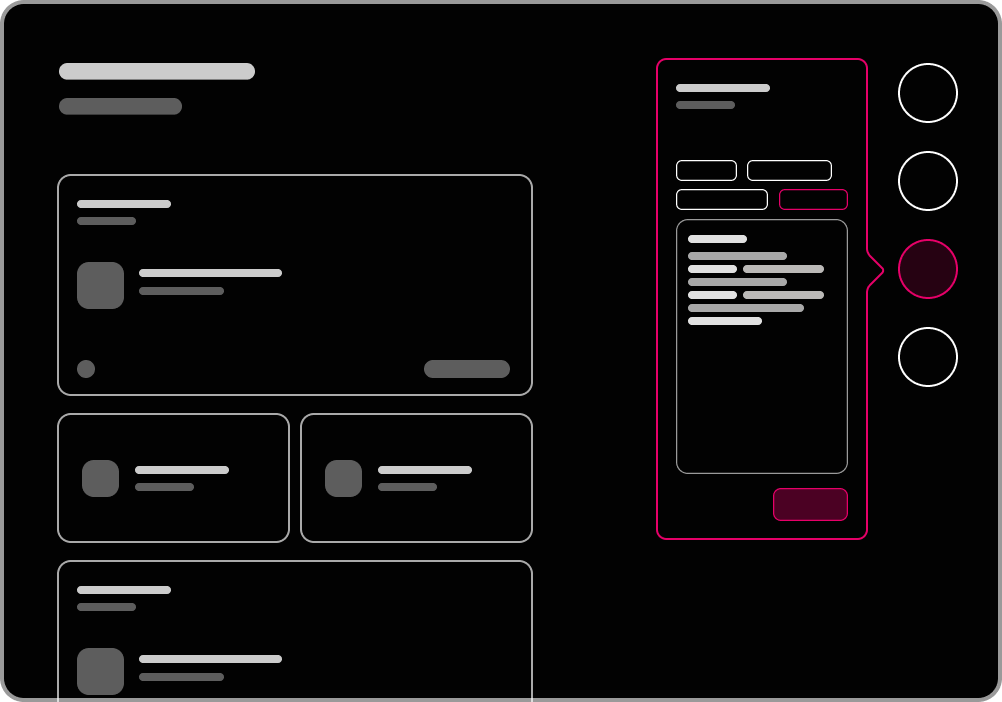
Introducing a Summary feature would add unnecessary friction to an already dense reporting environment.
It demands new UI elements, added logic, and ongoing maintenance, while offering limited incremental value relative to its complexity.
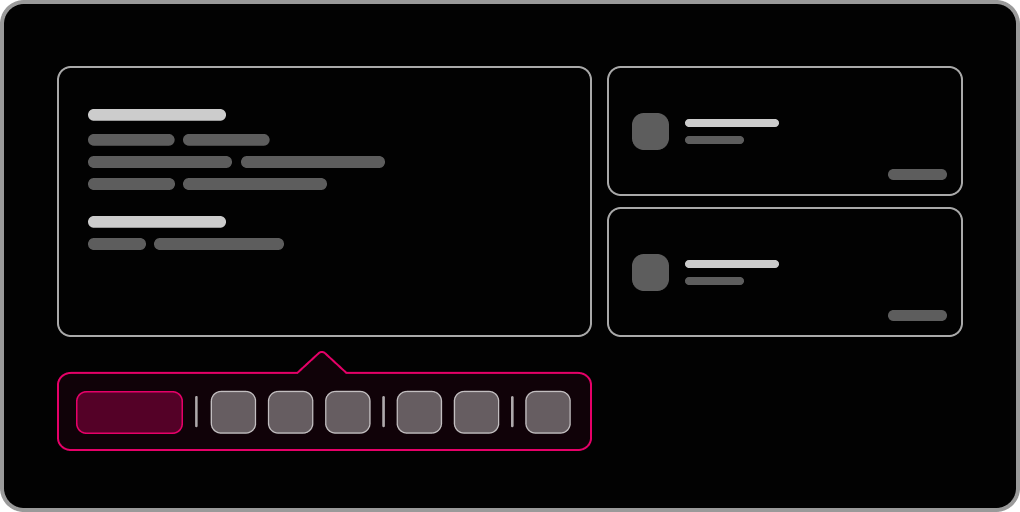
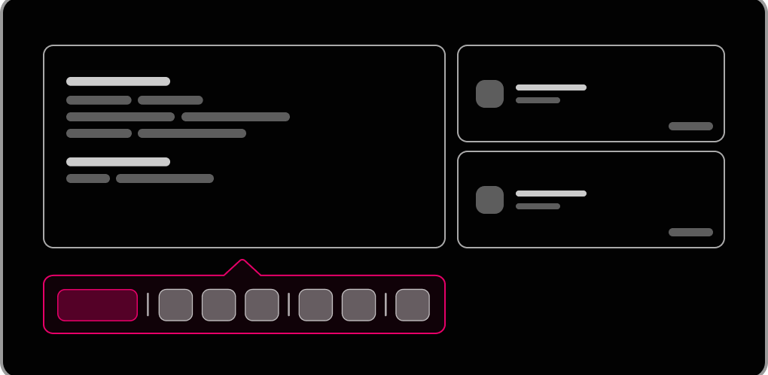
A contextual toolbar for text interactions is a strong concept, but the current system is not built to support this behavior.
If pursued, it should be treated as a platform-level investment, designed to scale across widgets rather than solving a single use case.
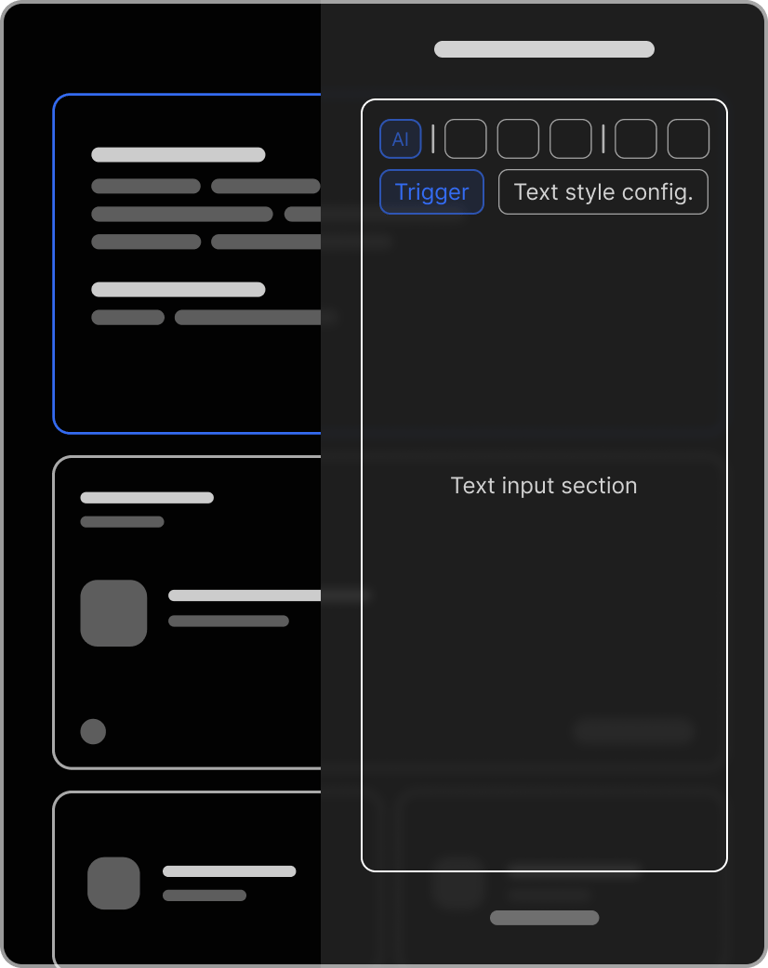
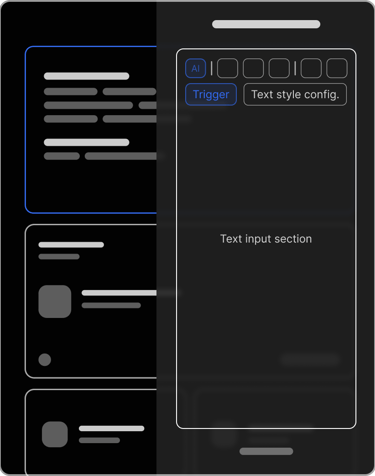
It minimizes cognitive load, aligns with existing user behavior, and enables faster delivery.
It also provides a natural entry point for introducing AI in a way that feels intuitive and immediately useful.


OBJECTIVES
01.
02.
03.

OPPORTUNITY
An Embedded Intelligence Layer
To deliver on that opportunity, I introduced intelligence across three focused layers already reflected in the solution.
Native Workflow Integration
Context-Aware Analysis
Controlled Automation
01.
02.
03.
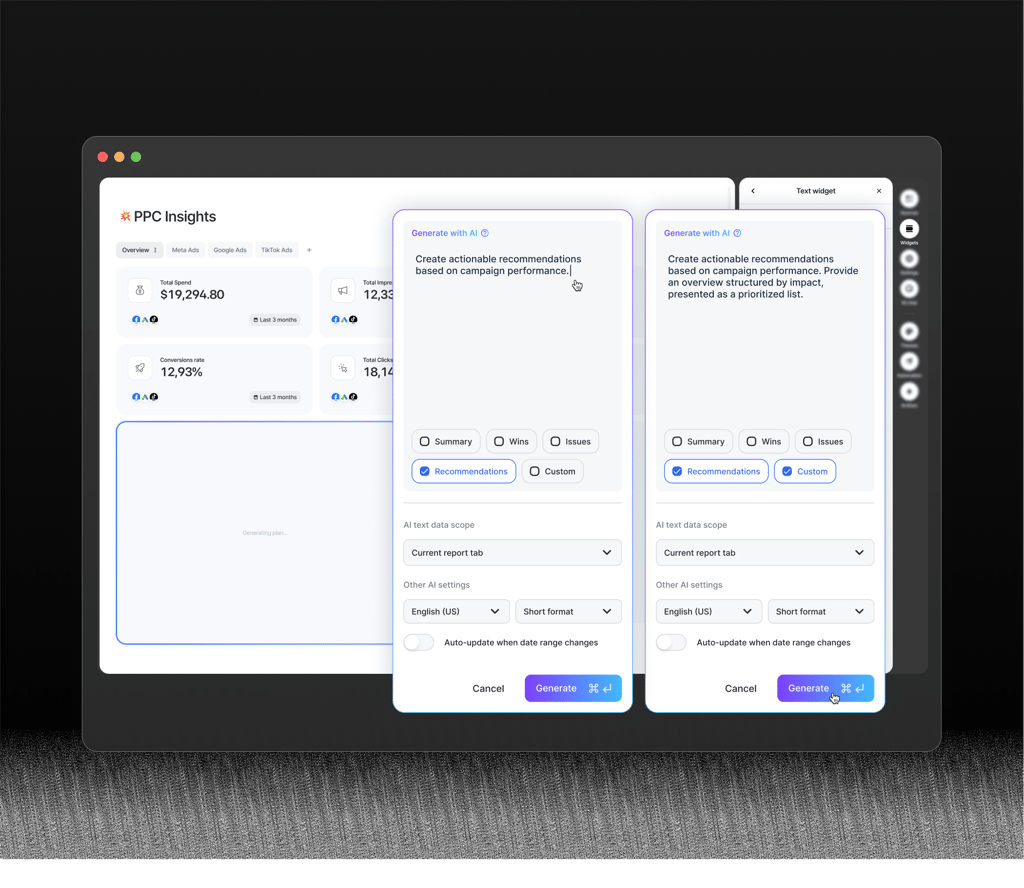
Instead of writing performance narratives from scratch, users could begin with prompt-based generation tied to the report context and quickly create a first draft that was already structured around the right type of insight.


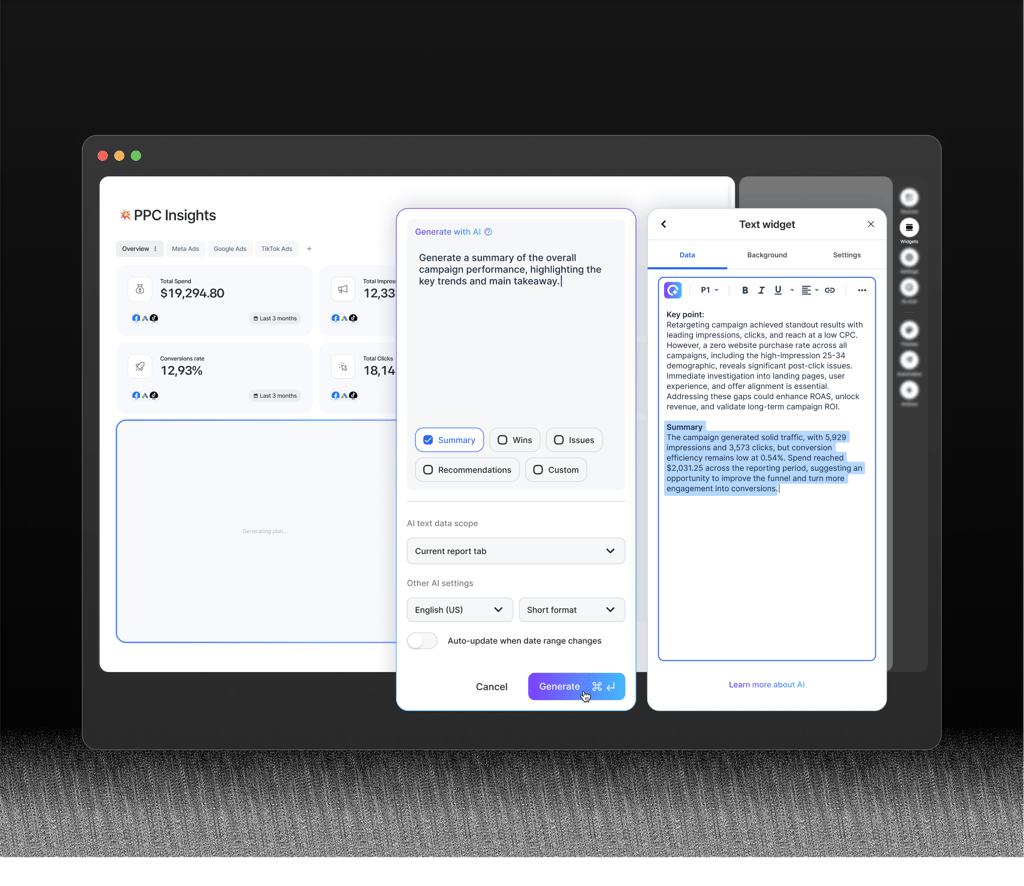
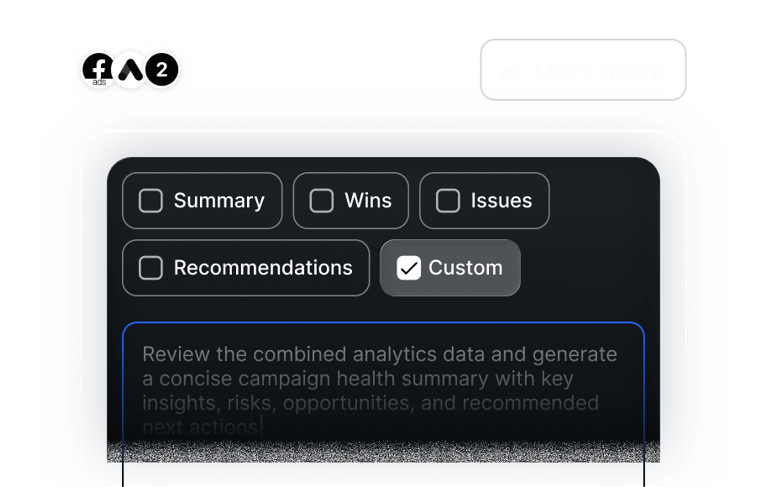
The Text widget brings together the text input and AI-generated output, empowering users to instantly adjust focus, tone, length, or language to match their needs - or keep the content as is, ensuring they stay in full control while saving time on repetitive work.


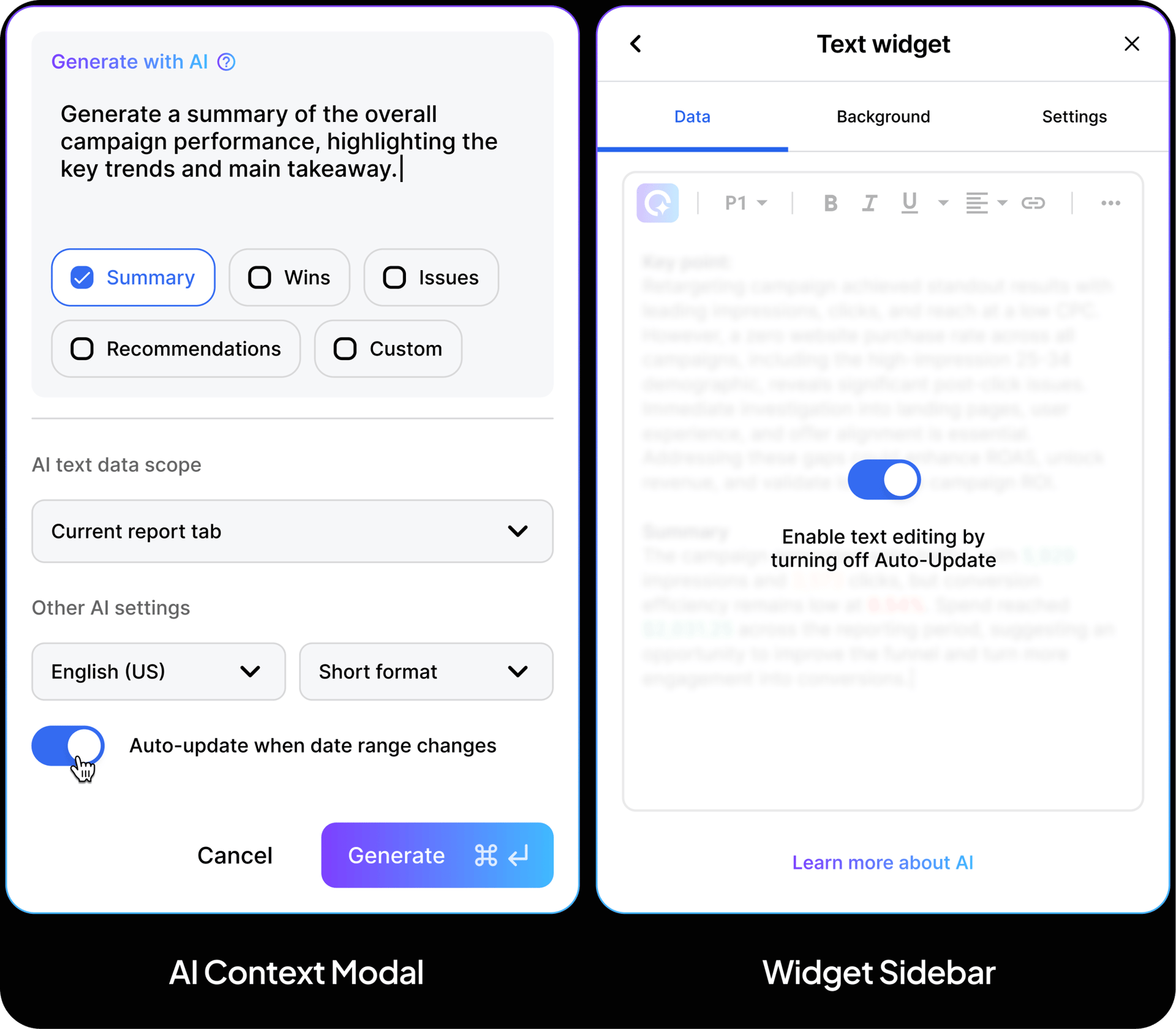
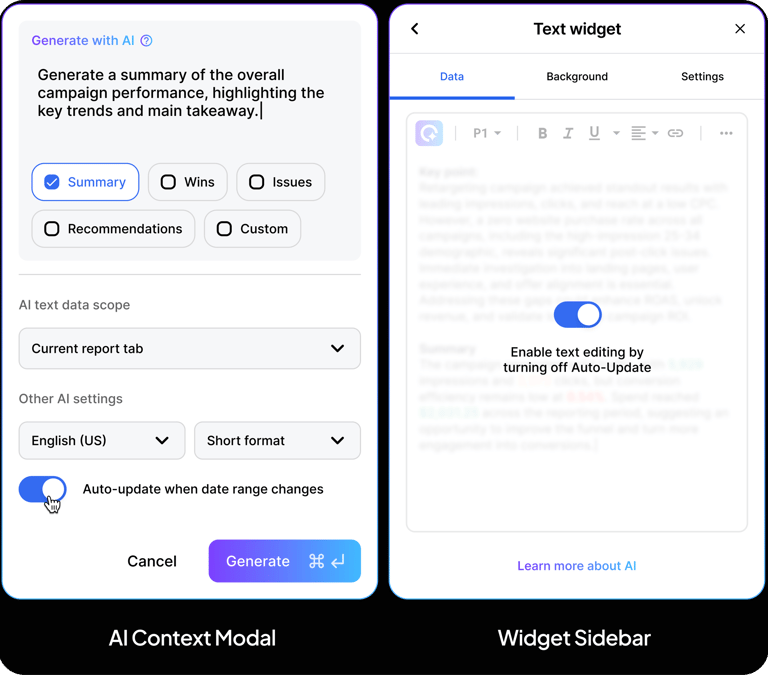
Because summaries were tied to the report’s date range, the system could update content as reporting periods changed. Reducing the need to manually rewrite recurring insights and creating a stronger foundation for ongoing intelligent assistance.
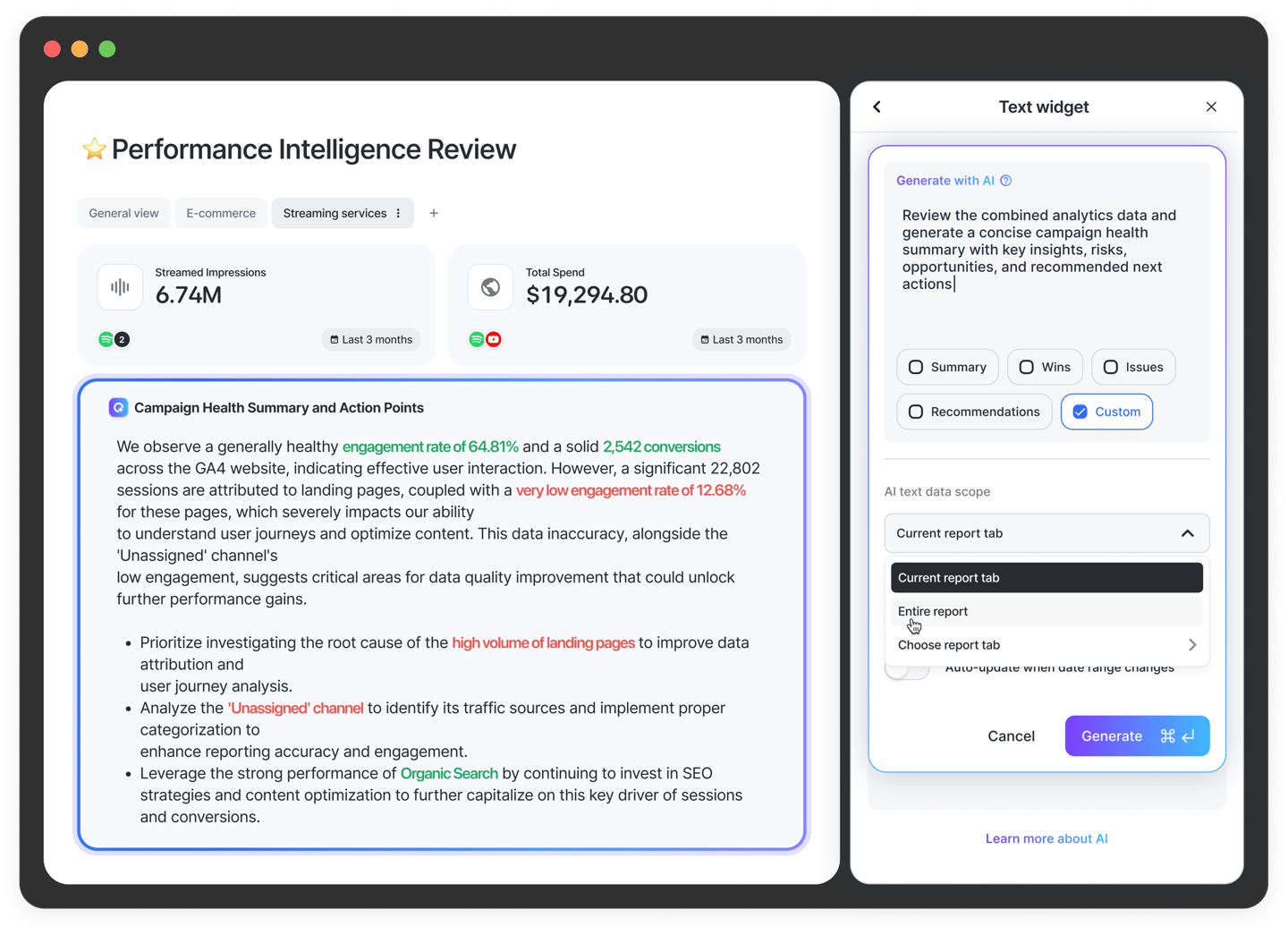
AI SUMMARY INTEGRATION
AI Summary integrates directly into the existing text widget, enabling users to generate structured performance insights in seconds. With a built-in preview, teams can review results before applying them, refine prompts based on focus, adjust tone, length, or language, and convert the output into fully editable text.
Because the summaries are tied to the report’s date range, they can also update as reporting periods change — reducing repetitive manual rewrites while maintaining quality and consistency at scale.
OVERALL IMPACT
+6 h
62%
From 15 Minutes to Seconds per Report
Reduced manual effort required to generate performance summaries, turning a repetitive task into an instant workflow.
Summaries Used by Active Users
More than half of active users engaged with AI-powered capabilities, validating strong product adoption and impact.
Ovidius Avizienus Design + Product Portfolio
2026